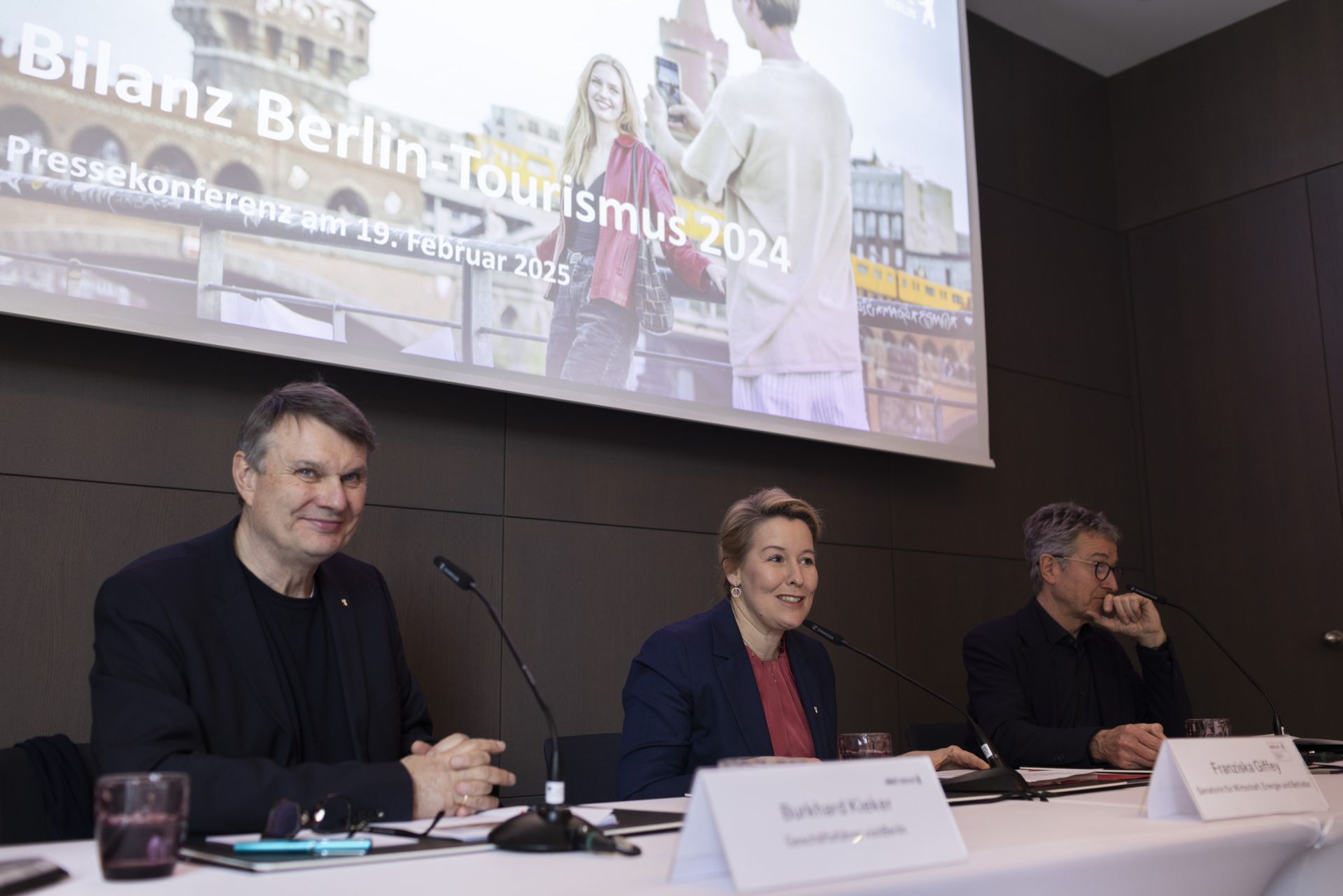
Franziska Giffey, Mayor and Senator for Economics, Energy, and Public Enterprises: "We have achieved what we set out to do: the 30 million mark for overnight stays in 2024 has been broken. Last year's 12.7 million guests and over 30.6 million overnight stays show that our city remains an attractive travel destination and event location even in economically challenging times. For the first time since 2019, we have exceeded the 30 million mark again and can continue the positive development from last year. Berlin attracts guests from Germany and abroad. This is not least due to the extensive range of leading trade fairs, congresses, and top events on offer. There are also many highlights coming up in 2025 that will attract visitors to the city in addition to Berlin's perennial favorites, such as the innovative tech fair GITEX EUROPE and the NFL football games. With a turnover of 17 billion euros, tourism is an important pillar of Berlin's economy. We will continue to work with targeted measures to promote a city-friendly, sustainable, and economically strong tourism sector in Berlin, because this benefits the entire city."
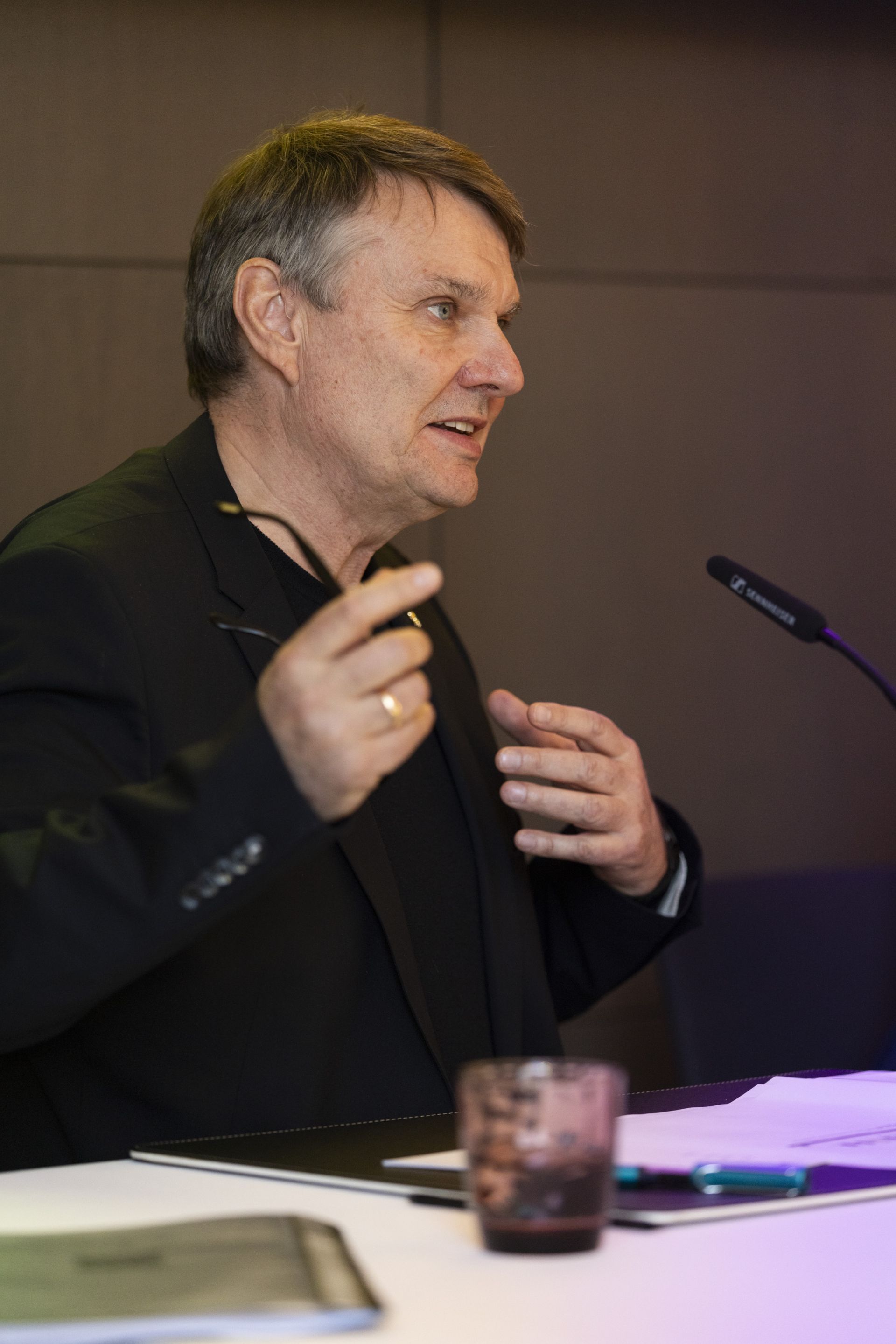
Burkhard Kieker, Managing Director of visitBerlin: “Together with London and Paris, Berlin is Europe's magnet for city and cultural tourism. The German capital proved this again in 2024 with more than 30 million overnight stays. In 2025, we want to continue to be among the best hosts on the continent with our many partners in Berlin's visitor economy.”
Berlin's guests appreciate art and culture and often travel by train
The main reasons for visiting Berlin are the sights, the art and culture on offer and the city's diversity. This is confirmed by a new evaluation of the "Quality Monitor Germany Tourism for 2023/2024", which collects extensive data on the travel behaviour of visitors to Berlin. According to the study, the average Berlin visitor is 40.3 years old, which is significantly younger than the national average (44 years). The largest age groups of Berlin travellers are 20 to 29 and 30 to 39-year-olds. German guests primarily come from North Rhine-Westphalia, Bavaria and Baden-Württemberg. More than half (54%) of German visitors to Berlin - and thus three per cent more than in the previous 2021/2022 survey period - are travelling by train in a climate-friendly way. Among international visitors, 41 per cent are travelling to Berlin by rail. Many guests book their journey at short notice, with almost a fifth doing so just one week before departure.
Berlin highlights 2025: 200 years of Museum Island and NFL in Berlin
Museum Island will celebrate its 200th anniversary in five years, marking the laying of the foundation stone for the Altes Museum in 1825; large parts of the Pergamon Museum will reopen in spring 2027. Exhibitions and events this year offer numerous occasions for a city trip to Berlin, such as the Kandinsky exhibition "Kosmos Blauer Reiter" from 1 March to 15 June at the Berlin Kupferstichkabinett, the first American football match of the NFL at the Berlin Olympic Stadium and the Festival of Lights from 8 to 15 October. Interactive exhibitions and immersive experiences are in vogue: In addition to the current crowd-puller Balloon Museum (until 27 April), Berlin has around 20 other museums offering selfies and modern art experiences. Special anniversaries: C/O Berlin is celebrating its 25th anniversary, the Berlinische Galerie its 50th anniversary. In September, the East Side Gallery celebrates its 35th anniversary as one of Berlin's most popular tourist attractions.
Important congresses 2025
Berlin has established itself as a conference and congress destination on the national and international market. In 2025, the city will be dominated by medical and digital congresses: the annual congress of the European Crohn's and Colitis Organisation (ECCO) starts today at CityCube Berlin (19 to 22 February 2025, 8,000 participants). One of the largest European congresses for cancer research, the congress of the European Society for Medical Oncology (ESMO), will be held at the exhibition grounds from 17 to 21 October 2025 with 30,000 participants. The Congress of the German Society of Neurology in Berlin (approx. 7,000 participants, 12 to 15 November) will take place in the CityCube Berlin.
In the digital sector, GITEX Europe, Europe's largest technology event, will celebrate its Berlin premiere (21 to 23 May, Messe Berlin). Re:publica, the conference on the digital society (26 to 28 May, Station Berlin, 30,000 participants), is well established. Berlin also welcomes the We are Developers Word Congress, one of the world's leading events for software developers (approx. 15,000 participants, 9 to 11 July, CityCube) and Big Bang 2025, Europe's largest AI festival (approx. 3,500 participants, 10 to 11 September, Alte Münze).
Tourism is one of the most important economic sectors in Berlin, is the employer of eleven per cent of Berliners and generates billions of euros in revenue per year, totalling 16.9 billion euros.