Diversity and inclusion in event planning

An event where everyone feels welcome and can participate equally, regardless of physical or cognitive abilities, background, gender, sexual orientation, religion or beliefs. That is what makes an event truly inclusive. Discover how to incorporate diversity and inclusion into your event planning and delivery, creating an experience that is open and accessible to as many people as possible.

Four people have a discussion onstage with tropical plants in the background.

Why Is Diversity Important at Events?

Diversity enriches events. Different perspectives, experiences and needs create opportunities for fresh ideas, meaningful connections and the exchange of knowledge. To ensure that all participants can benefit equally, diversity and inclusion should be considered from the very beginning of the event planning process. The concept of Diversity, Equity & Inclusion (DEI) provides an essential foundation for this approach. But what exactly do these three terms mean?

Table of Contents

  1. What Does Diversity, Equity & Inclusion (DEI) Mean?
  2. The Benefits and Opportunities of Diversity
  3. Diversity in the Events Industry
  4. Inclusive Events – More Than Just a Trend
  5. Planning Inclusive Events: Tips and Practical Measures
  6. Incorporating DEI into Event Registration
  7. Diversity in Event Communications
  8. Choosing an Accessible Event Venue
  9. Choosing the Right Catering
  10. Incorporating Diversity into Your Event Programme
  11. Best Practice Examples of DEI at Events
  12. Creating a Positive Impact Through Diversity and Inclusion

What Does Diversity, Equity & Inclusion (DEI) Mean?

DEI stands for Diversity, Equity & Inclusion. The concept promotes treating everyone with respect, fairness and dignity, regardless of their background, gender, sexual orientation, disability or other personal characteristics. While these principles may seem self-evident, many people still experience discrimination or exclusion in everyday life. This can be due to one or more personal characteristics that continue to present barriers in our society.

  • Diversity: Refers to the range of differences between people, including age, gender, background, religion, sexual orientation, and physical or cognitive abilities.
  • Inclusion: Means creating an environment where everyone feels welcome, respected and valued, regardless of their individual characteristics, and has an equal opportunity to participate.
  • Equity: Means recognising and addressing people's different circumstances and needs, while removing existing disadvantages to ensure everyone has fair opportunities and equal access.

The Benefits and Opportunities of Diversity

Apprentices and Students Value DEI in the Workplace

Diversity and inclusion are key to building a future-ready corporate culture and attracting skilled professionals. This is highlighted by a representative study conducted by IU International University of Applied Sciences in 2024: 75.1 per cent of apprentices and students surveyed consider it important that their future employers take steps to promote diversity and inclusion. Equal opportunities therefore play a significant role when choosing an employer.

Companies Are Increasingly Prioritising Diversity and Inclusion

Diversity and inclusion are also becoming increasingly important strategic priorities for German companies. A representative survey commissioned by the digital industry association Bitkom in 2026 reveals:

  • 39 per cent of companies have already set targets to increase workforce diversity. Of these, 21 per cent have established general targets, 12 per cent have defined specific targets with a timeline, and 6 per cent have already achieved their goals.
  • A further 39 per cent have not yet set diversity targets but are planning or discussing them. Of these, 13 per cent already have concrete plans in place.

These findings highlight how promoting diversity has become an integral part of recruitment and corporate strategy for many companies.

Diversity in the Events Industry

How diverse and inclusive is the events industry? The 2025 Diversity Report, published by R.I.F.E.L. on behalf of fwd: Bundesvereinigung Veranstaltungswirtschaft, reveals that awareness of diversity is growing, but there is still considerable room for improvement when it comes to putting inclusive practices into action.

While 80 per cent of the companies surveyed already employ people of different nationalities, other aspects of diversity receive significantly less attention. For example, only 30.1 per cent of companies consider physical and mental disabilities to be particularly relevant.

At the same time, clients are placing greater emphasis on inclusive event planning. The companies surveyed reported increasing demand for the following measures:

  • 67.4 per cent: Gender-neutral language
  • 50.7 per cent: Physical accessibility
  • 45.7 per cent: Digital accessibility
  • 41.3 per cent: Multilingual communication
  • 39.1 per cent: Diverse representation among speakers and panellists
  • 34.1 per cent: Dedicated awareness teams and contact points

These findings show that diversity and inclusion are playing an increasingly important role in event planning and delivery. With the growing influence of Generation Z, audiences are also becoming more discerning and socially conscious. However, there is still significant potential to embed inclusive practices more firmly into the way events are planned and

Man in a wheelchair smiling, woman showing him something on her smartphone at a café.

Inclusive Events – More Than Just a Trend

A boy at the Special Olympic World Games 2023 is shown giving a thumbs up and smiling with jo

Landmark events such as the Special Olympics 2023 and the Global Disability Summit 2024 in Berlin sent a powerful message about inclusion and demonstrated how inclusive event concepts can be put into practice. They also reinforced the fact that diversity and equal participation are now integral to modern event design.

Companies that take a proactive, forward-thinking approach to removing barriers can strengthen their reputation and public image over the long term. This also makes it easier to build relationships with potential target audiences.

Planning Inclusive Events: Tips and Practical Measures

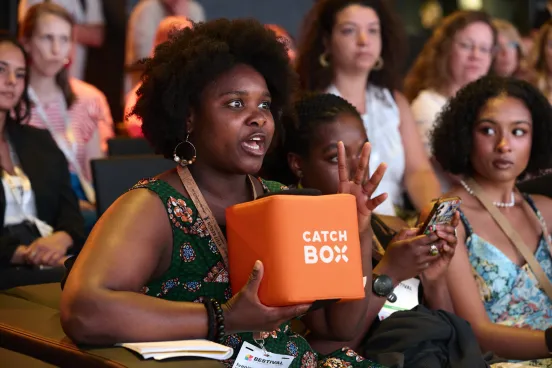
Woman from the audience speaks into an orange box, which is a microphone

An inclusive event starts with thoughtful planning. From choosing an accessible venue and designing a diverse programme to ensuring accessible communication, even small measures can help remove barriers and enable everyone to participate.

But what should event planners consider in practice? The following tips will help you incorporate diversity and inclusion into every stage of planning and delivering your event.

Incorporating DEI into Event Registration

From the very first step, ask your audience what they need to feel completely comfortable at your event. This gives you a clear picture of the specific measures that should be implemented and enables you to discuss options with your Suppliers (Venue, catering, transport providers).

Here are some concrete examples of questions you might include:

  • Do some guests require mobility aids or sign language interpreters on site?
  • Will you need an accompanying person or personal assistance?
  • Are there any dietary intolerances we should be aware of?
  • Would participants like their pronouns to be included on name badges?
  • Are there sensitivities to stimuli (e.g. light, noise, large crowds) that we should consider?
  • Are there any medical or health-related conditions we should take into account when planning? 

Diversity in Event Communications

Five friends walking outdoors, smiling and laughing in autumn sunlight.

When promoting your event, aim to use imagery that reflects the diversity of society.

Choose visuals that represent a wide range of body types, age groups, ethnic backgrounds and disabilities. Use gender-neutral language throughout your communications. This helps ensure that your target audience feels represented and included, making your content more engaging and relevant to them.

Choosing an Accessible Event Venue

Person in a wheelchair using a ramp to enter a building with large columns.

Choosing an accessible venue is essential when planning an inclusive event. But accessibility involves much more than simply installing a ramp. Pathways and corridors must be wide enough and free from obstacles to allow wheelchair users and people with reduced mobility to move around safely and independently.

Equally important are lifts in multi-storey venues, designated accessible parking spaces close to the entrance, and accessible toilets that meet the needs of all guests.

Gender-neutral toilets and complimentary sanitary products can also make a valuable contribution to creating a truly inclusive event. They demonstrate openness, respect and an awareness of different needs. Where required, prayer rooms and quiet spaces can provide additional opportunities for reflection

Choosing the Right Catering

Stuffed eggplant garnished with herbs and pomegranate seeds on white plates.

International event audiences have diverse dietary preferences and requirements. Alongside vegetarian and vegan options, religious dietary requirements such as kosher and halal food, as well as food intolerances, may also need to be considered.

As it is not always possible to accommodate every dietary requirement, it is advisable to tailor your catering to the specific needs of your participants. A predominantly plant-based menu provides an excellent starting point. Plant-based dishes generally produce fewer greenhouse gas emissions than meat-based alternatives and already cater to a wide range of dietary preferences.

Ask participants about their dietary preferences, allergies and intolerances during registration. This will help you plan a menu that meets their needs while minimising food waste. Remember to consider religious fasting periods and culturally specific mealtimes, particularly during Ramadan.

Our tip: Donate surplus food to organisations or charities that distribute meals to people in need. Dedicated apps and local initiatives offer a range of convenient and reliable ways to donate leftover food.

Incorporating Diversity into Your Event Programme

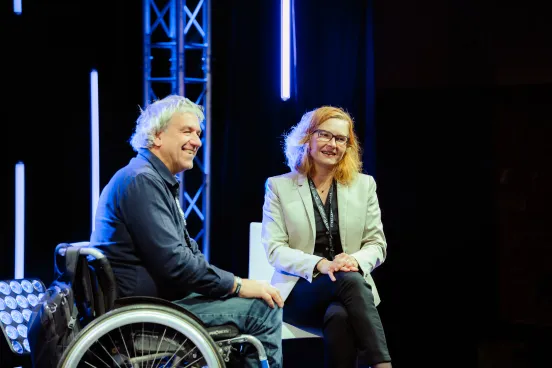
On stage, a man in a wheelchair and a woman are seated. Both are smiling and looking in the same direction

A well-curated programme is at the heart of every successful event. Bringing together people with different backgrounds, experiences and perspectives is key to inspiring fresh ideas and engaging discussions. Choose speakers who represent a variety of genders, cultural backgrounds and worldviews. Collaborating with networks and organisations dedicated to diversity and inclusion can also help you connect with experts who bring valuable insights and perspectives to your event.

Working with Suppliers

Partner with suppliers who share your values and commitment to diversity and inclusion. Look for companies that actively champion diversity, have their own code of conduct and support the German Diversity Charter (Charta der Vielfalt).

Support for Planning Inclusive Events

Looking to make your event more inclusive? Specialist service providers can help you develop diverse event concepts, raise awareness among your staff and implement measures to create a safe, respectful and inclusive environment.

The Berlin Convention Finder features Berlin-based service providers such as The Impact Company, offering consultancy, workshops and tailored concepts to support you in planning and delivering inclusive events.

Best Practice Examples of DEI at Events

Six women speak on a panel stage at a colorful conference event.

Diversity and Inclusion at Bestival 2025

Bestival 2025 placed a strong emphasis on diversity, equality and inclusion. The event aimed to achieve at least 50 per cent gender parity among its speakers. More than 40 speakers from different countries, representing a wide range of backgrounds and perspectives, shared their expertise at the B2B festival.

A dedicated Mindfulness & Relaxation Hub provided a quiet, safe space, particularly for neurodivergent participants who needed a break from sensory stimulation. Inclusion was further promoted through a partnership with WIR KÜMMERN UNS gUG, while a dedicated session explored accessibility at events.

To make the content as accessible as possible, all panel discussions were transcribed and summarised in real time. Participants also had the option of having the content translated.


VENUS: Collaboration with Berlin's Association for Blind and Visually Impaired People (ABSV)

For more than a decade, VENUS Berlin has demonstrated how trade fairs can be made accessible to blind and visually impaired visitors. In 2026, its guided tours for blind and visually impaired visitors celebrated their tenth anniversary. Developed in collaboration with the Allgemeiner Blinden- und Sehbehindertenverein Berlin (ABSV), the tours offer blind and visually impaired visitors a unique opportunity to experience the trade fair through senses such as touch and hearing.

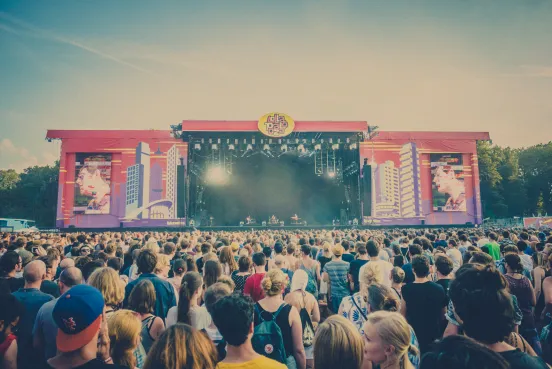
Lollapalooza ist ein amerikanisches Musikfestival mit Alternative Rock-, Rap-, und Punkrock-Bands, Dance, Comedy, Mode und K…

Accessibility and Awareness at Lollapalooza Festival

Lollapalooza Festival in Berlin is a prime example of how diversity and inclusion can be incorporated into large-scale events. Free tickets for people accompanying visitors with disabilities, accessible entrances and timetables, and the option to bring assistance dogs all help make the festival more accessible to people with disabilities.

Diversity and Awareness

With FLINTA toilets – inclusive facilities for women, lesbians, intersex, non-binary, trans and agender people – and a dedicated awareness team, the festival takes further steps to create a respectful and discrimination-free environment. Easily identifiable by their coloured vests, the team members serve as points of contact for festivalgoers, offering support to anyone experiencing violations of personal boundaries, harassment or discrimination, whether related to gender, sexual orientation, disability or ethnic background.

These measures demonstrate how accessibility, diversity and mutual respect can be integrated into the planning and delivery of large-scale events.

Creating a Positive Impact Through Diversity and Inclusion

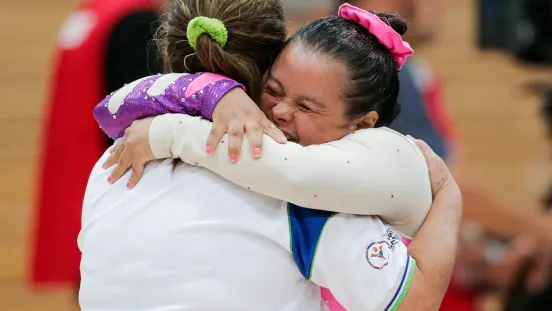
Two athletes embrace with joy at the Special Olympics World Games 2023, beaming with happines

As you have seen, measures to increase visibility and inclusion at events can range from simple actions to carefully developed concepts and comprehensive strategies. Whatever your approach to event planning, even the smallest step can help people who often experience exclusion in everyday life feel seen, heard and valued.

Hosting an event that embraces DEI principles also strengthens your reputation as a company or organisation, demonstrating your commitment to social responsibility and a forward-thinking approach. At the same time, it enhances the positive social impact of your event by giving underrepresented groups a platform to share their perspectives and experiences that might otherwise go unheard.

Plan Your Inclusive Event in Berlin

Looking to make your next event more diverse and inclusive? Berlin offers a wealth of opportunities to remove barriers and encourage equal participation. The Berlin Convention Finder helps you discover suitable event venues, conference hotels and specialist suppliers who can support you in bringing your inclusive event to life.

Berlin TV Tower framed within a tablet featuring the text “Berlin Convention Finder” in white lettering